
Families who live with pediatric chronic fatigue syndrome, fibromyalgia, or orthostatic intolerance already know what a thin toolkit feels like. Symptoms can be real and disabling, yet poorly captured by a single test. Supportive care helps some children and adolescents, but many families still leave appointments without a disease-modifying plan. Across medicine, diseases with few targeted options keep pushing researchers toward new biologic platforms, because older formats have not been enough.
This article is educational. It does not recommend treatments. It describes a pattern in 2026: when options are few, scientists often try new protein-based tools. An adult oncology example later in this piece illustrates that pattern. Adult cancer research is not the same as pediatric chronic-illness care, and the two should not be blended.
When the toolkit is thin, research looks elsewhere
Hard-to-treat does not mean unused. It usually means existing medicines, rehabilitation, and supportive strategies leave large gaps. In pediatric ME/CFS, fibromyalgia, and orthostatic intolerance, those gaps are familiar. Pacing, sleep support, fluids, physical therapy, and symptom management can be essential, yet they do not always restore school or daily function.
When a disease lacks a reliable molecular handle—a receptor or pathway that a conventional pill can grab—research tends to shift toward biologics. Biologics are medicines built from proteins or other large molecules rather than small chemical drugs. They include antibodies and, in newer experimental work, smaller protein pieces called nanobodies. Unmet need is one of the forces that funds this work. That is a research-culture fact, not a prescription for a child, and not a reason to mix adult oncology pipelines with pediatric chronic-illness care.
What a biologic platform actually is
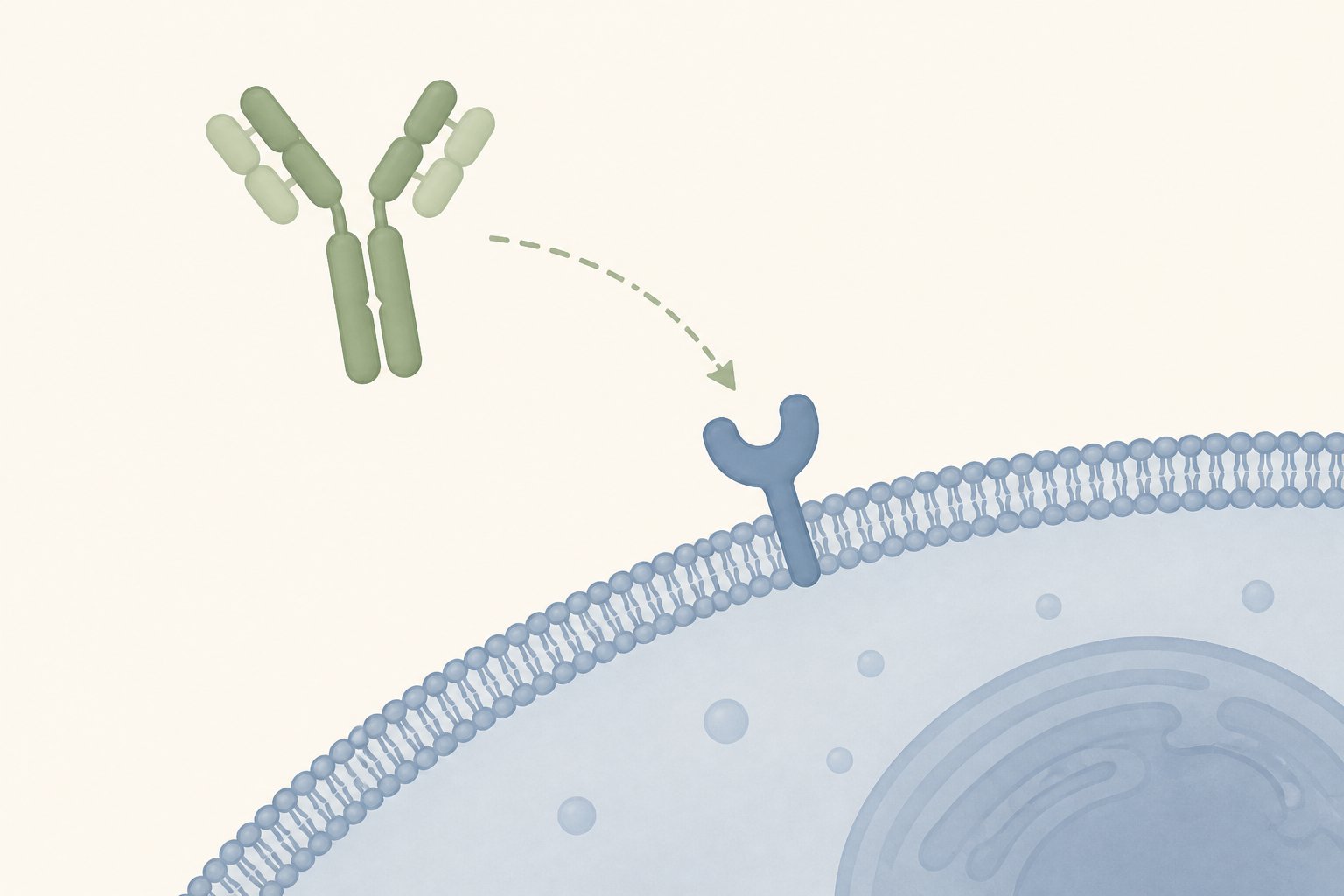
A single drug is one molecule aimed at one job. A platform is a design that can be reused, like a chassis that can carry different targeting pieces. Antibody drugs are a well-known example. Once scientists learned how to make monoclonal antibodies at scale, many diseases gained new options over decades. Many candidates failed; the platform did not erase the need for evidence.
Nanobodies are a smaller cousin of antibodies, first studied in camelids and later engineered for possible human use. Because they are compact, researchers hope they can reach targets that larger antibodies struggle to reach, including, in some experimental work, targets inside cells. Compact size is a design feature, not a guarantee of safety or benefit, and not a reason to assume that a nanobody studied in adult tumors has any role in pediatric fatigue, pain, or orthostatic symptoms. A platform in 2026 may still be entirely preclinical: studied in cells or animals, and not yet tested as a medicine in patients.
An adult oncology example: why few-option cancers pull new formats
Adult oncology is one of the clearest places to see this pattern, and it is a different clinical world from pediatric chronic fatigue, fibromyalgia, or orthostatic intolerance. Aggressive adult cancers such as triple-negative breast cancer often lack the surface markers that existing targeted drugs use. When those markers are absent, fewer targeted options remain. That mix of high need and difficult biology is why experimental formats keep appearing in this space.
One line of work focuses on p53, a protein that normally helps damaged cells stop dividing or die. In many tumors, p53 is mutated or dysfunctional. Restoring that function has been a long-standing research goal, in part because conventional biologics often cannot enter cells well. Nanobody candidates are being studied as one possible way to approach intracellular targets in model systems. That is laboratory science. It is not a statement about what will work in the clinic, and it is not a statement about children or about non-cancer illness.
A U.S. company, PHP Biotech, is developing a nanobody candidate called PHP53-nb aimed at aggressive adult cancers such as triple-negative breast cancer. In public descriptions of the program, PHP53-nb is designed to enter cancer cells in model systems and reactivate mutant p53, with the goal of pushing those cells toward apoptosis, or programmed cell death. The work is research-stage. PHP53-nb is not an approved medicine. It is not a pediatric therapy. It has not been shown to treat pediatric chronic fatigue syndrome, ME/CFS, fibromyalgia, orthostatic intolerance, or children. It is cited here only as an example of how a few-option adult cancer can pull a new biologic format into the laboratory.
Readers should treat company-reported model data as early. Effects in tumor-cell models or animals do not answer safety, dose, or clinical benefit in people. Those questions, if answered at all, come later in carefully designed trials. Until then, an oncology nanobody remains an illustration of a research strategy, not a treatment path for pediatric chronic illness.
Oncology examples are not pediatric chronic-illness care
It is worth saying this in plain language. Adult cancer biology is not pediatric ME/CFS biology. A nanobody designed to reactivate mutant p53 in tumor models is not a treatment for post-exertional malaise, widespread pain, or orthostatic intolerance. Age, immune development, disease mechanisms, trial ethics, and outcome measures all differ. Mixing those stories can create false hope.
Pediatric chronic-illness care is built around function, safety, school, sleep, nutrition, autonomic symptoms, and preventing harm from over-activity or under-support. That work happens with pediatricians, specialists, rehabilitation teams, and families. It does not become more scientific by borrowing language from adult cancer drug development. If a future biologic were ever studied for a pediatric chronic illness, that would require its own rationale, its own pediatric data, and its own ethical review. No such claim is being made here about PHP53-nb or about any other oncology candidate. Shared frustration that the toolkit is too small does not transfer results from one field to the other.
How families can follow science without absorbing hype
News about biologics often arrives as a headline. A more durable habit is to ask what stage the work is in. Preclinical means models, not patients. Early-phase trials ask mainly about safety and dosing. Later trials ask whether people actually do better. Approval still does not make an adult oncology candidate relevant to a child with a different disease.
“Platform” can mean a reusable design, or it can make a single early candidate sound larger than it is. “Targeted” can mean a molecule was aimed at a receptor in a dish. “First-in-class” describes novelty, not proven benefit. For pediatric ME/CFS, fibromyalgia, and orthostatic intolerance, the evidence base in 2026 remains centered on careful diagnosis, education, energy management, treatment of orthostatic symptoms when present, pain and sleep support, and attention to school and mental health. New platforms in other diseases do not replace that foundation.
Questions families can bring to a clinician
These questions are meant for a conversation, not as a demand for a new drug. Is anything being discussed a treatment studied in children or adolescents with this condition, or is it adult research from another field? What is the current stage of any study you are mentioning—laboratory, animal, early human, or approved care? What would change in our child’s plan if we wait for more evidence, versus if we adjust pacing, fluids, medications already in use, or school supports now? How will a proposed change be measured, and how would harm be noticed? If a research article mentions cancer, p53, or nanobodies, can you help keep that material separate from our child’s diagnosis?
This article is for education. It is not medical advice, a diagnosis, or a recommendation to start, stop, or seek any medicine. Families should discuss individual care with qualified clinicians who know the young person. Hard-to-treat diseases will keep driving new biologic platforms; that is a pattern in research. It is not a promise, and it is not a pediatric treatment story.